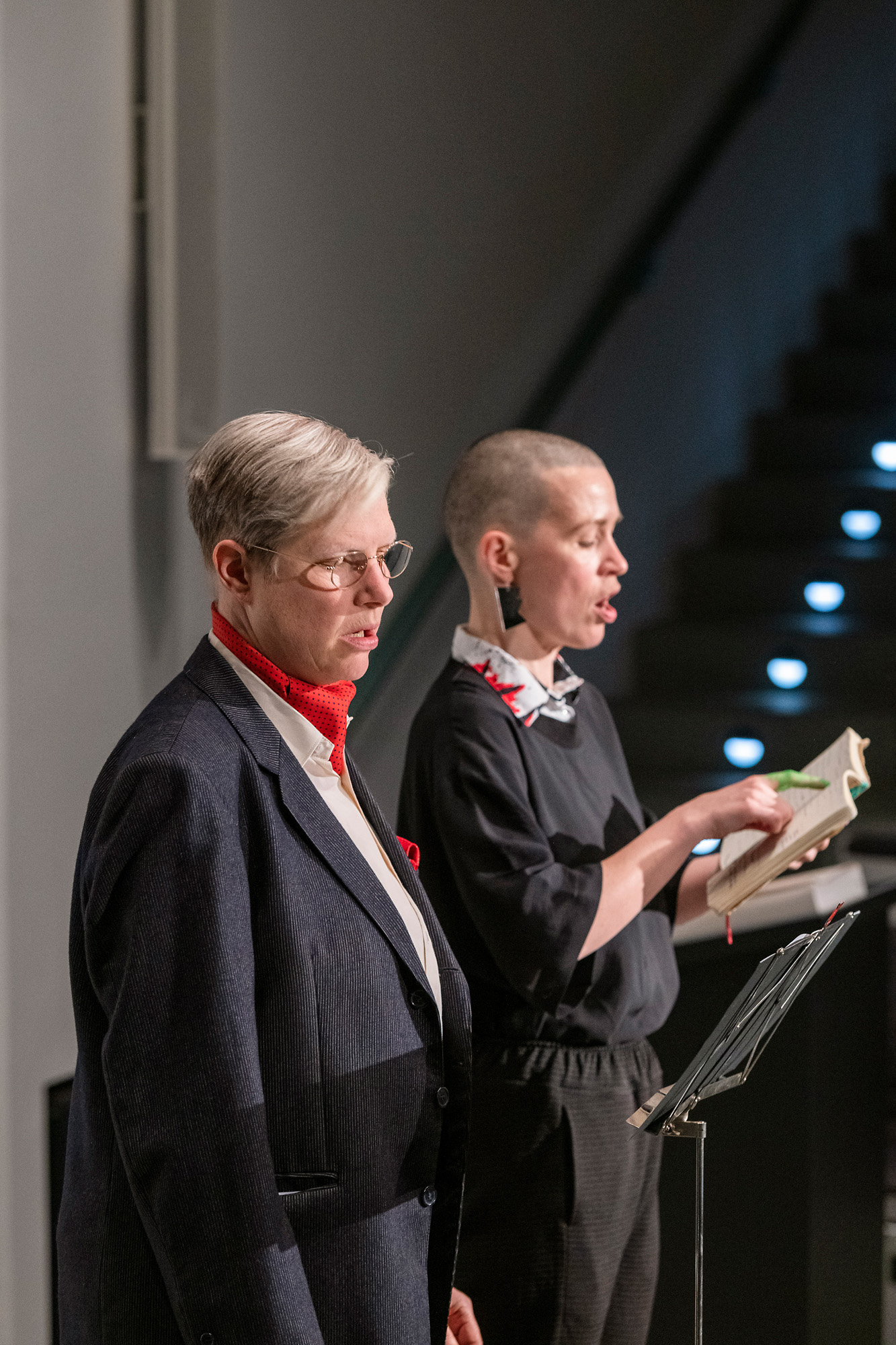
Tontänze (a selection)
by Antonia Baehr and Jule Flierl
engl.
The term „Tontänze“ (tone dances) comes from Valeska Gert. “Tontanz“ describes the movement of voice in the body and thus departs from the cliché of the silent dancer, artists Jule Flierl and Antonia Baehr take up this conceptual term, which opens up new forms of relationship between body, dance and voice in this selection.
Jule Flierl and Antonia Baehr got to know each other through the transmission of a score. When Antonia Baehr sent Jule Flierl the score to Antonia Baehr’s piece ‚My Dog is My Piano‘, the two began a reflection and practice in the interstice between written instructions and artistic processes.
de.
Der Begriff „Tontanz“ stammt von Valeska Gert. Der Begriff bezeichnet die Bewegung von Stimme im Körper und verabschiedet sich damit vom Klischee der stummen Tänzerin. Diesen konzeptuellen Begriff, der neue Beziehungsformen von Körper, Tanz und Stimme eröffnet, greifen Jule Flierl und Antonia Baehr in dieser Auswahl auf.
Jule Flierl und Antonia Baehr lernten sich durch die Übermittlung einer Partitur kennen. Als Antonia Baehr Jule Flierl die Partitur zu Antonia Baehrs Stück „My Dog is My Piano“ beibrachte, begannen die beiden eine Reflexion und Praxis im Zwischenraum von schriftlicher Anweisungen und künstlerischen Prozessen.
TONTÄNZE (A SELECTION)
by and with Antonia Baehr und Jule Flierl
„Ore of Peace“ – 2018 – Jule Flierl
„My Dog is my Piano“ – 2012 – Antonia Baehr
„A wie Arsen“ – 1972 – Ruth Wolf-Rehfeldt
„Dissociation Study“ – 2017 – Jule Flierl
„HA HA HA“ – 2007 – Henry Wilt
Performances:
1 April 2023, Videonale 19, Kunstmuseum Bonn, Germany
15 July 2023, Kunsthalle Baden-Baden in the frame of the opening of the exhibition AUDITIONS FOR AN UNWRITTEN OPERA, Germany
New selection:
„Ore of Peace“ – 2018 – Jule Flierl
„My Dog is my Piano“ – 2012 – Antonia Baehr
„Dissociation Study“ – 2017 – Jule Flierl
„Screaming and Silence“ – 2026 – Antonia Baehr (based on a composition by Christian Kesten)
„HA HA HA“ – 2007 – Henry Wilt
Performances:
6 September 2025, Forêêêt#3 Journée Chorégraphiée, Les Bazis, France
20 May 2026, ICI Institute for Cultural Inquiry, Berlin, Germany
Antonia Baehr has been working with scores for many years. They are a special way of connecting and creating collaborations for Baehr. They are also a way of reading the world. But how readable is the world? And how can one read in an unreadable world? For Baehr, scores are carriers of desire and emotionally charged objects. They are birthday presents, portraits of friendships, portraits in animal metaphors, double portraits. They have an addressee. What happens when the addressee changes, slips into other bodies?
Antonia Baehr is a choreographer based in Berlin. Her works explore, among other things, the fiction of the everyday and of theatre. Baehr studied with VALIE EXPORT in Berlin and completed her Master’s degree at the School of the Art Institute of Chicago. She is currently working on a research project on SCREAMING. She also collaborates in duos at present with Lucile Desamory, Neo Hülcker, Latifa Laâbissi, and Jule Flierl. Baehr is the producer of the horse whisperer and dancer Werner Hirsch (who appears in the film installations of Pauline Boudry and Renate Lorenz), the musician and choreographer Henri Fleur, as well as the composer/performer and ex-husband Henry Wilde.
Jule Flierl is a dance and voice artist who develops practices that conceive of the voice as a dancer, translating dance into the auditory realm. Her practice lives between experimental choreography and somatic singing methods, in which she develops scores to unsettle the relationship between seeing and hearing. She revives and continues the legacy of Valeska Gert, avant-garde dancer from 1920’s Berlin, who first conceptualized the term Tontanz: to dance with one’s voice. She works in conversation with historical, fictional and contemporary voices such as Valeska Gert and Katalin Ladik. Scores are the membranes through which Flierl makes contact with her artistic elective affinity. She asks into the paper and translates the responses she receives.
Jule Flierl is fascinated how conceptions of the body change over time and that the voice as a technology of the self always finds new relations to the body. She asks herself how the baroque Bel-Canto voice would inhabit the gestures of romantic ballet (Operation Orpheus 2016), how the anti propaganda of Valeska Gert’s dancing tones in the Weimar Republic would have sounded (Störlaut 2018) and how to choreograph the separation of body image and vocal sound of Katalin Ladik’s avant-garde performances during the Cold War (U.F.O. 2021). Jule graduated from SEAD-Salzburg academy for contemporary dance, holds an MA in choreography at EXERCE Montpellier and continually studies the somatic voice method “Lichtenberger Methode”.
juleflierl.weebly.com

© Staatliche Kunsthalle Baden-Baden, Photo: Karolina Sobel
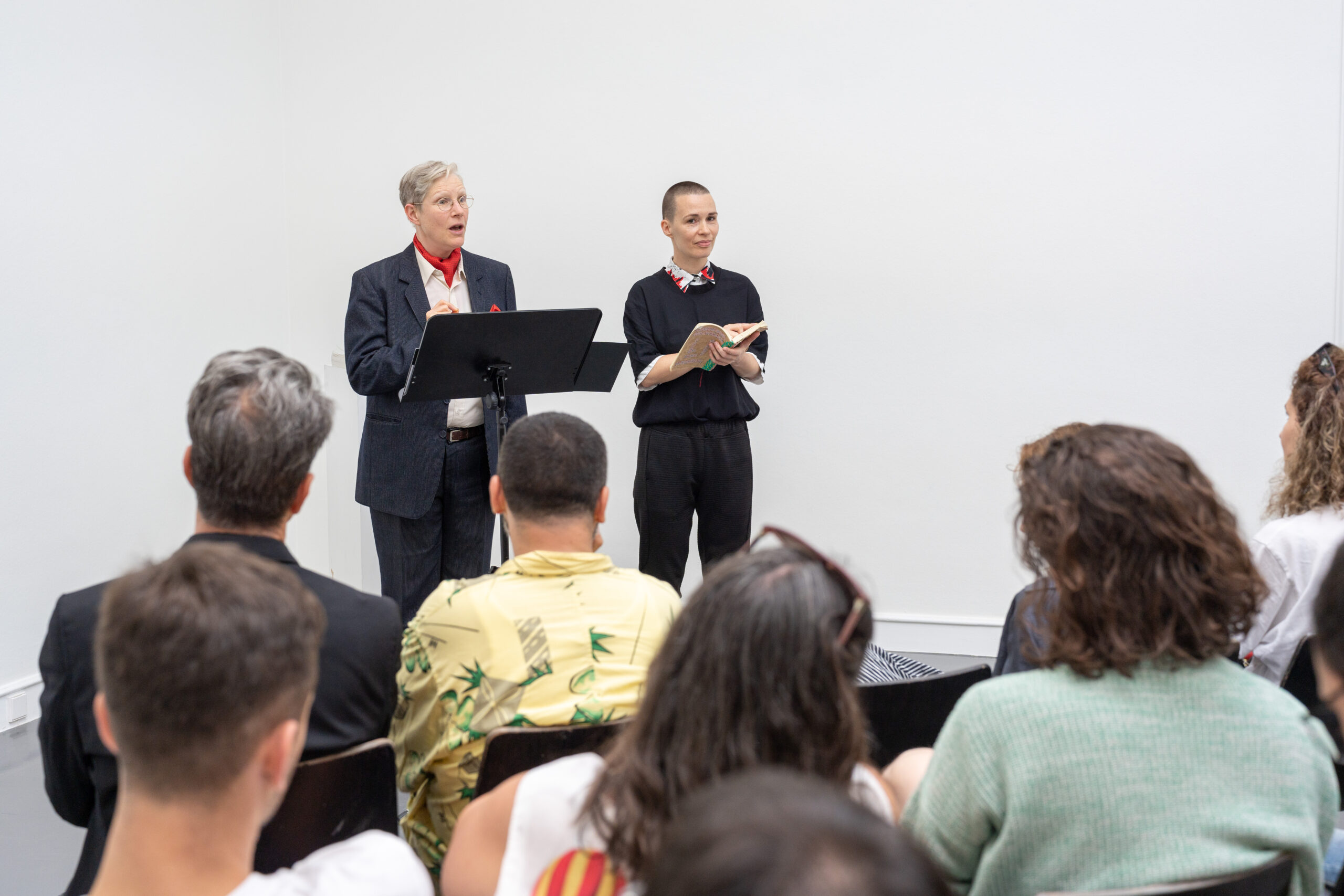
© Staatliche Kunsthalle Baden-Baden, Photo: Karolina Sobel
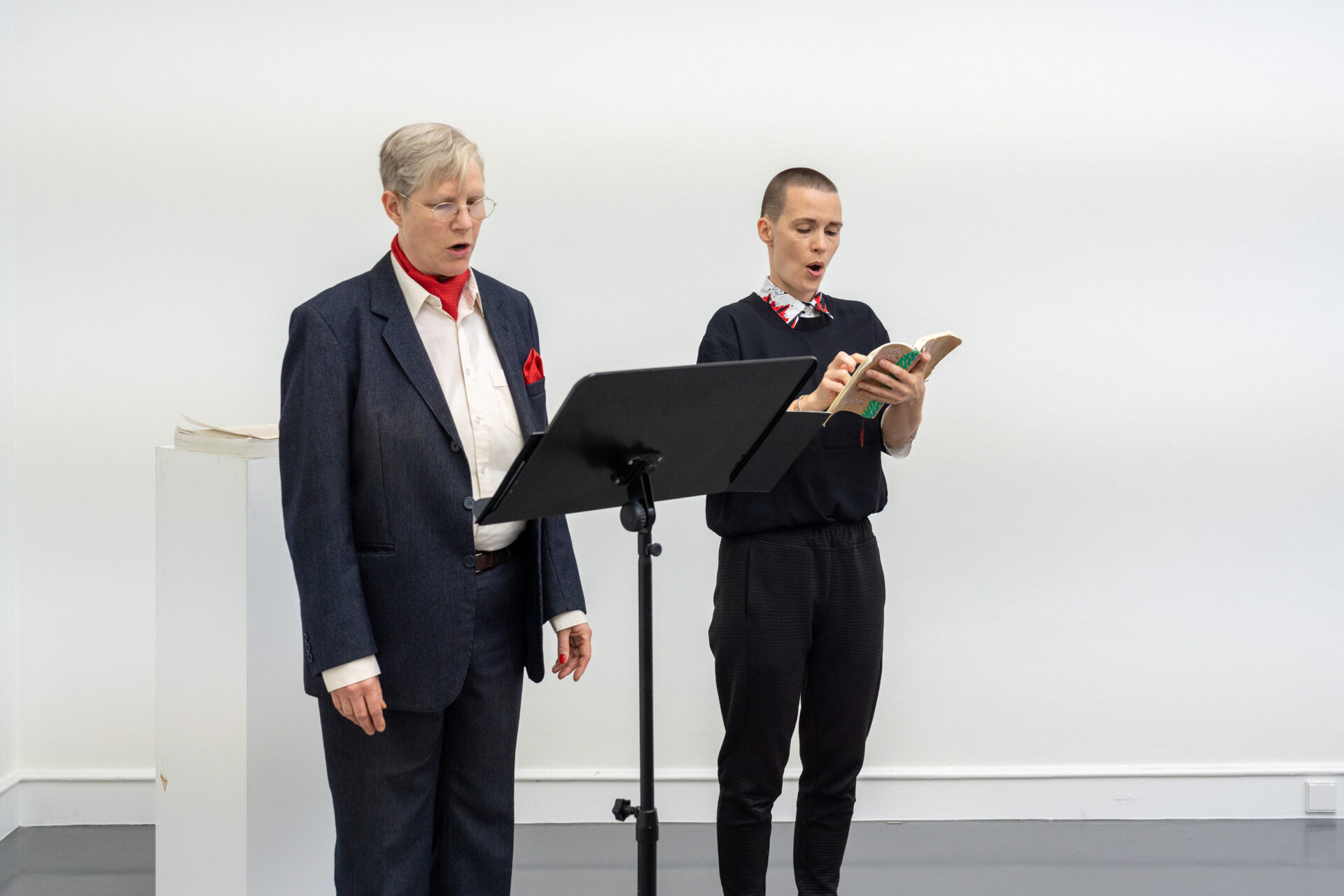
© Staatliche Kunsthalle Baden-Baden, Photo: Karolina Sobel
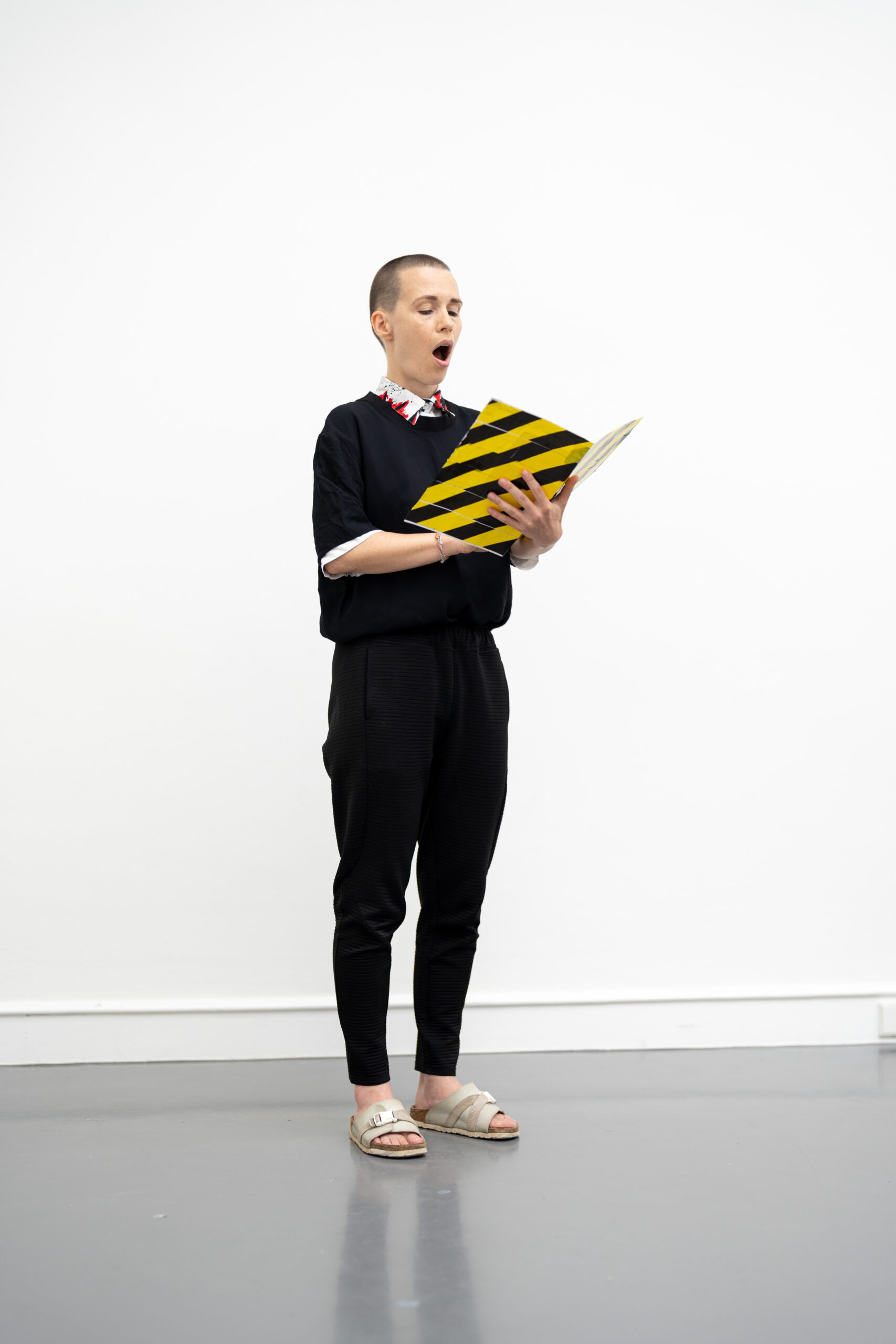
© Staatliche Kunsthalle Baden-Baden, Photo: Karolina Sobel
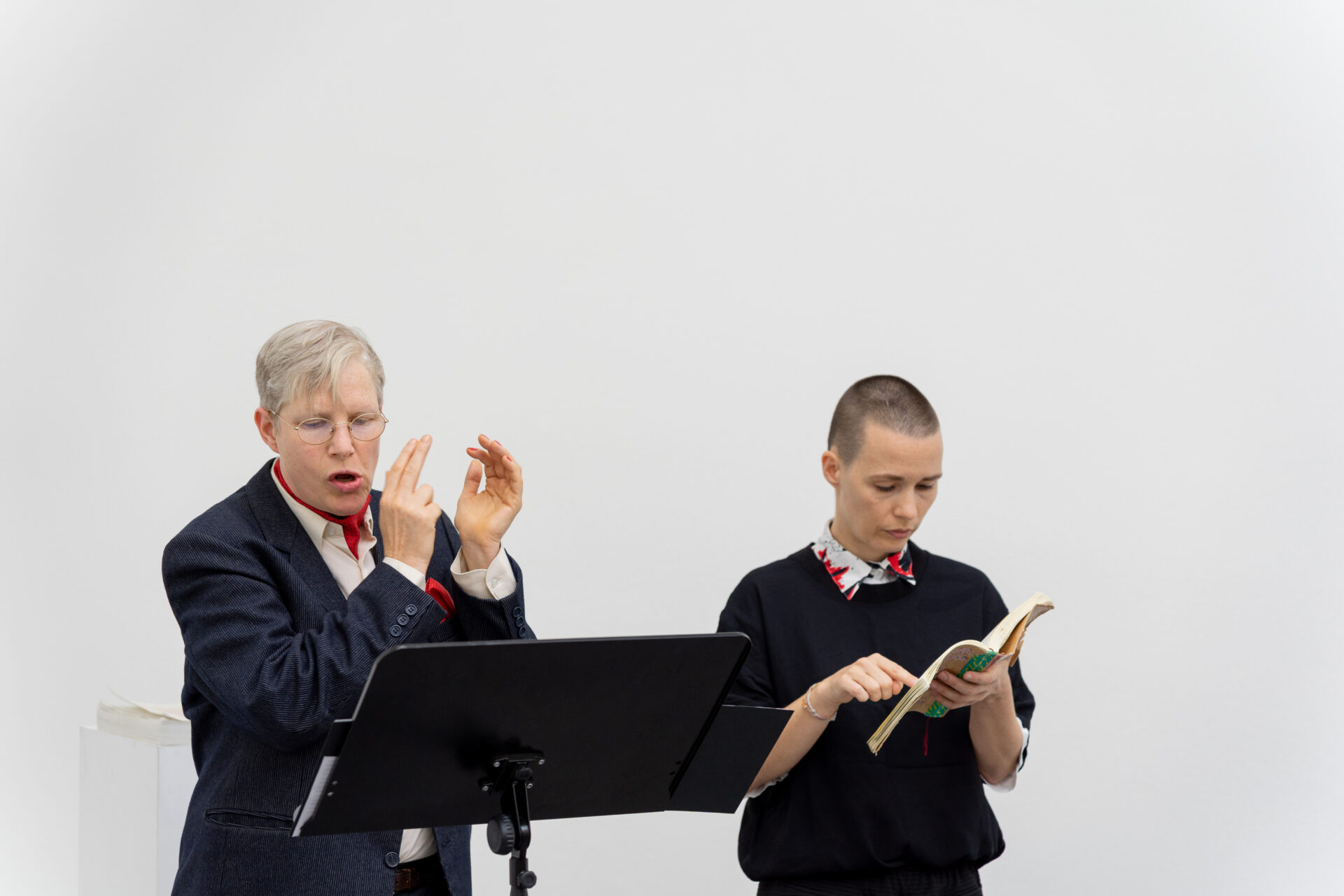
© Staatliche Kunsthalle Baden-Baden, Photo: Karolina Sobel
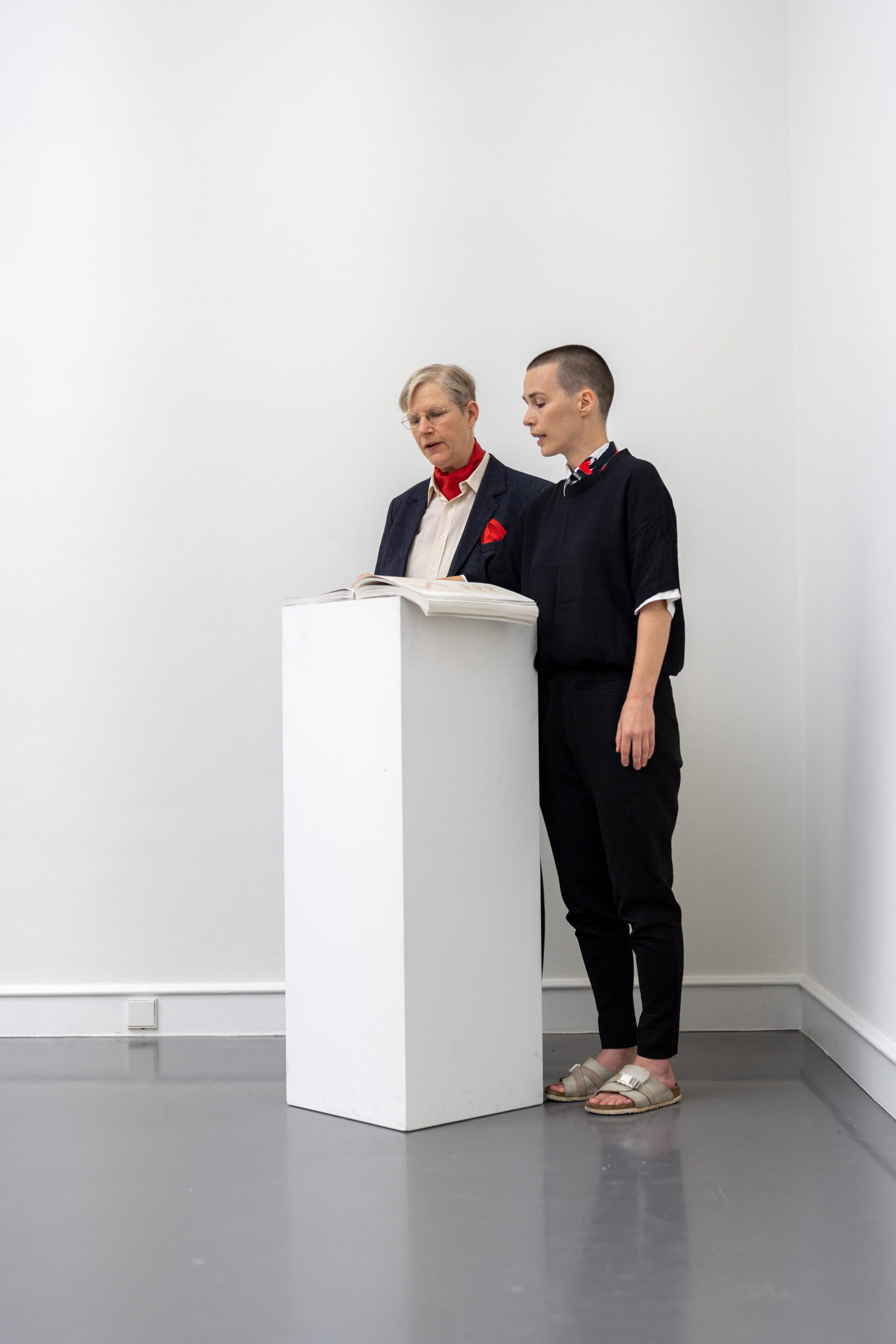
© Staatliche Kunsthalle Baden-Baden, Photo: Karolina Sobel
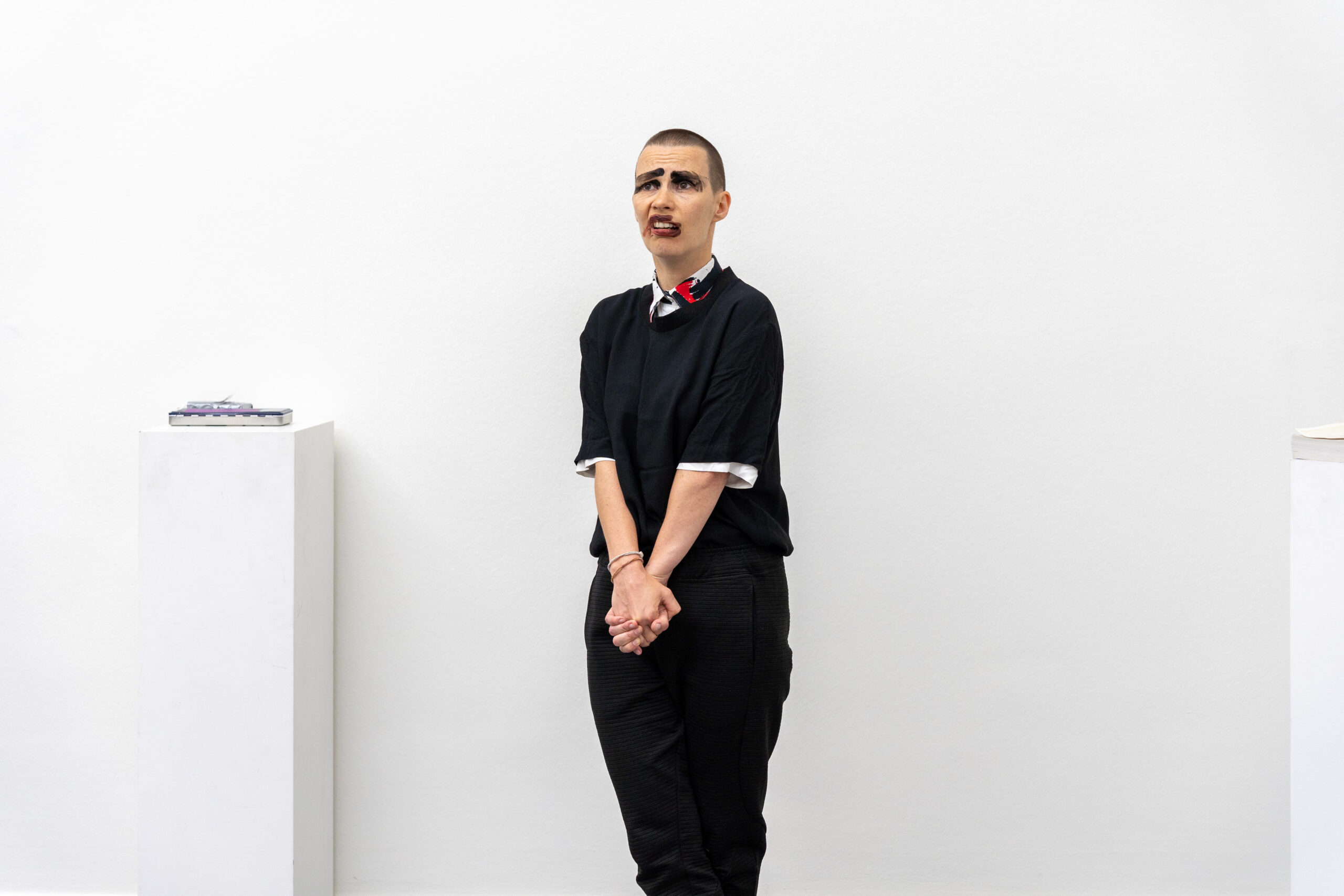
© Staatliche Kunsthalle Baden-Baden, Photo: Karolina Sobel
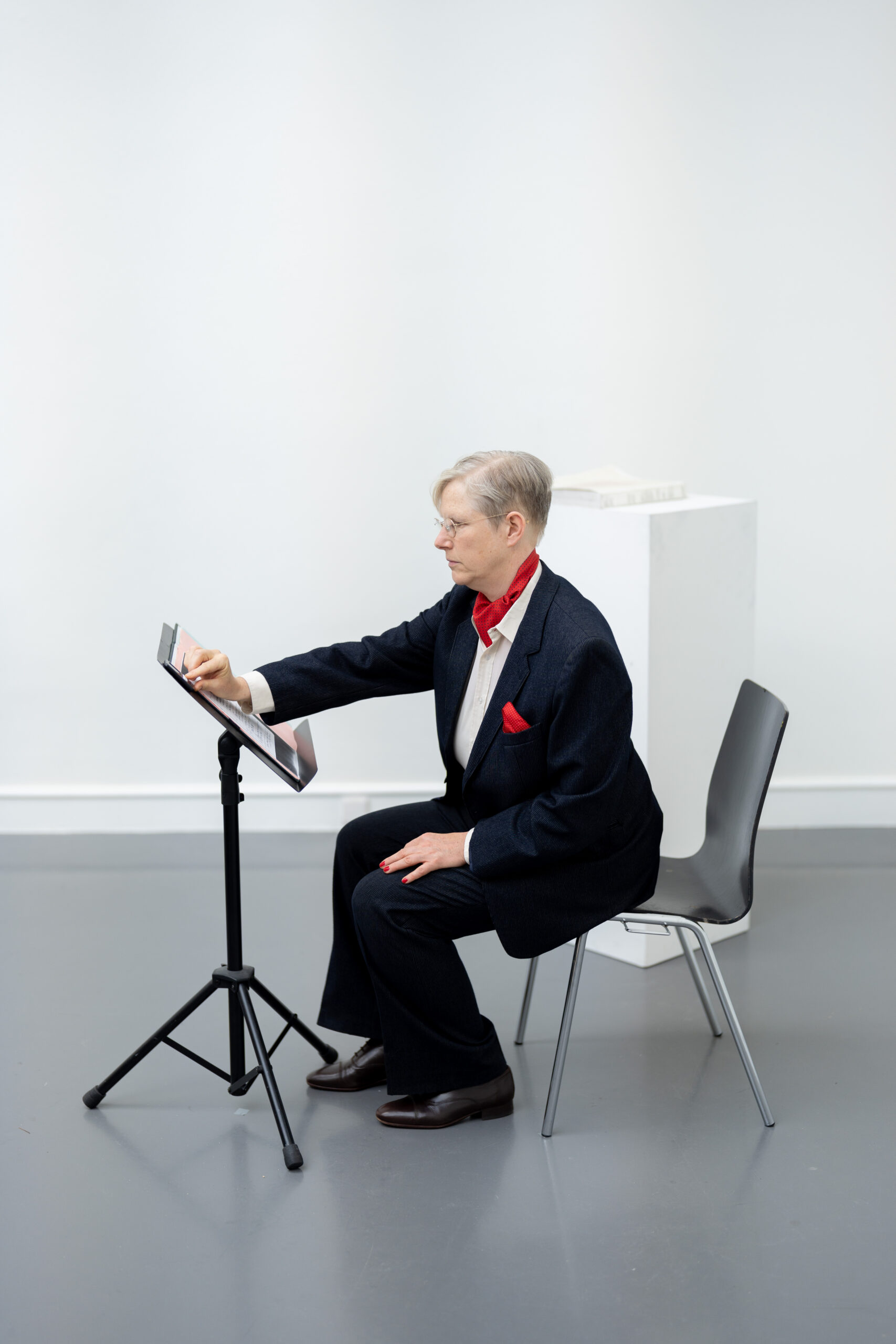
© Staatliche Kunsthalle Baden-Baden, Photo: Karolina Sobel
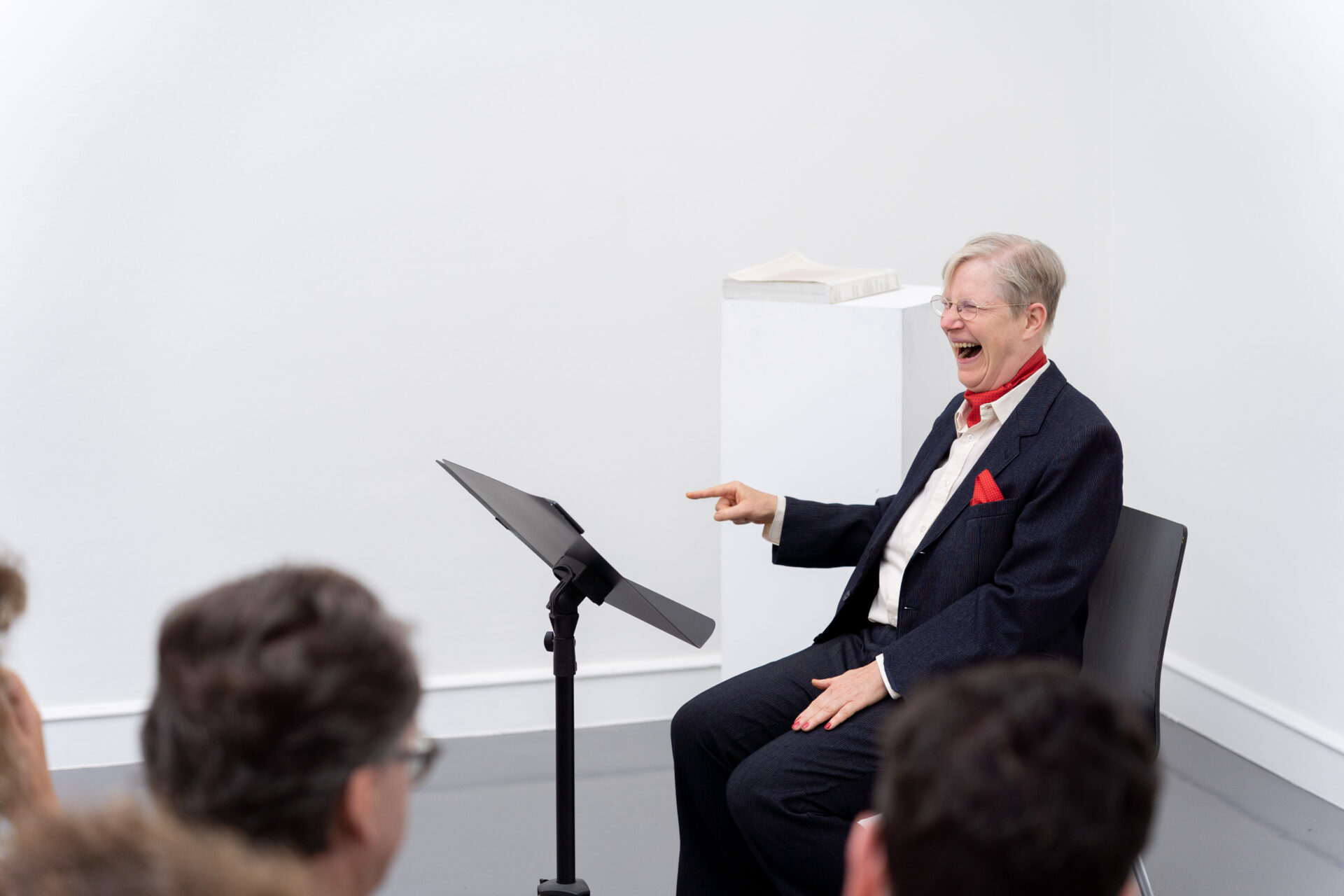
© Staatliche Kunsthalle Baden-Baden, Photo: Karolina Sobel
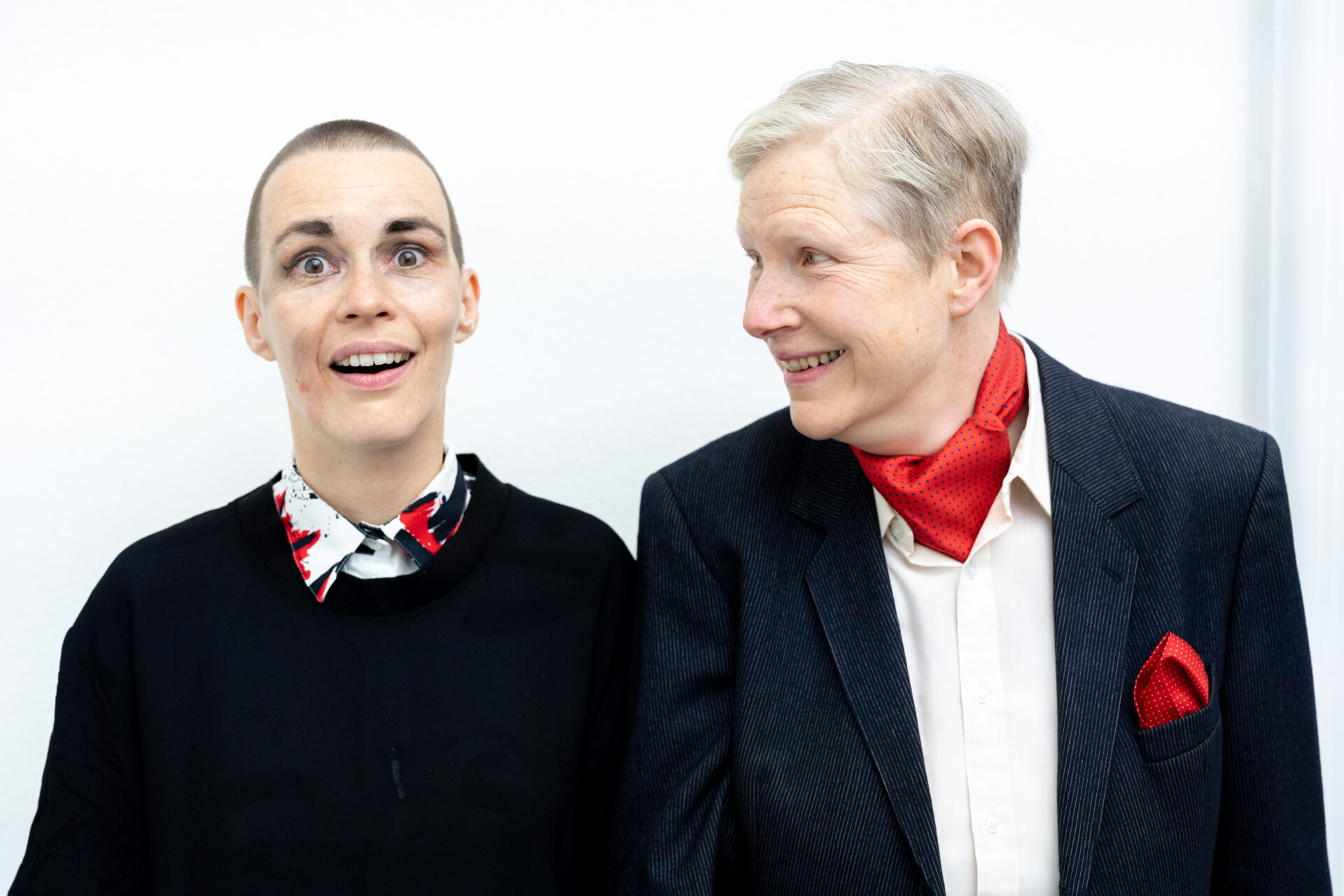
Ⓒ Videonale 19, Photo: David Ertl